
We Are Not Going Back

There are times when you feel like an active part of history. Voting for the first Black president. Participating in a nationwide protest. Watching marriage equality become the law of the land. In those moments, history stops feeling like something you read about and starts feeling like something you are responsible for.
But there are also times when you feel like history is being forced upon you. Those moments make you feel powerless. The ground shifts beneath your feet. If you’re like me, you look at your children, and you can’t think of anything to say other than, “I’m sorry.”
The recent decision in Callais v. Louisiana was one of those moments for many of us.
On paper, it is a redistricting case. In reality, it is part of a much larger effort to weaken the protections that made American democracy more representative in the first place. For people who grew up in the South, especially Black Americans, there is nothing abstract about that fight. We know exactly what happens when political power is concentrated in fewer hands and entire communities are told their voices matter less.
The Medicine We Need
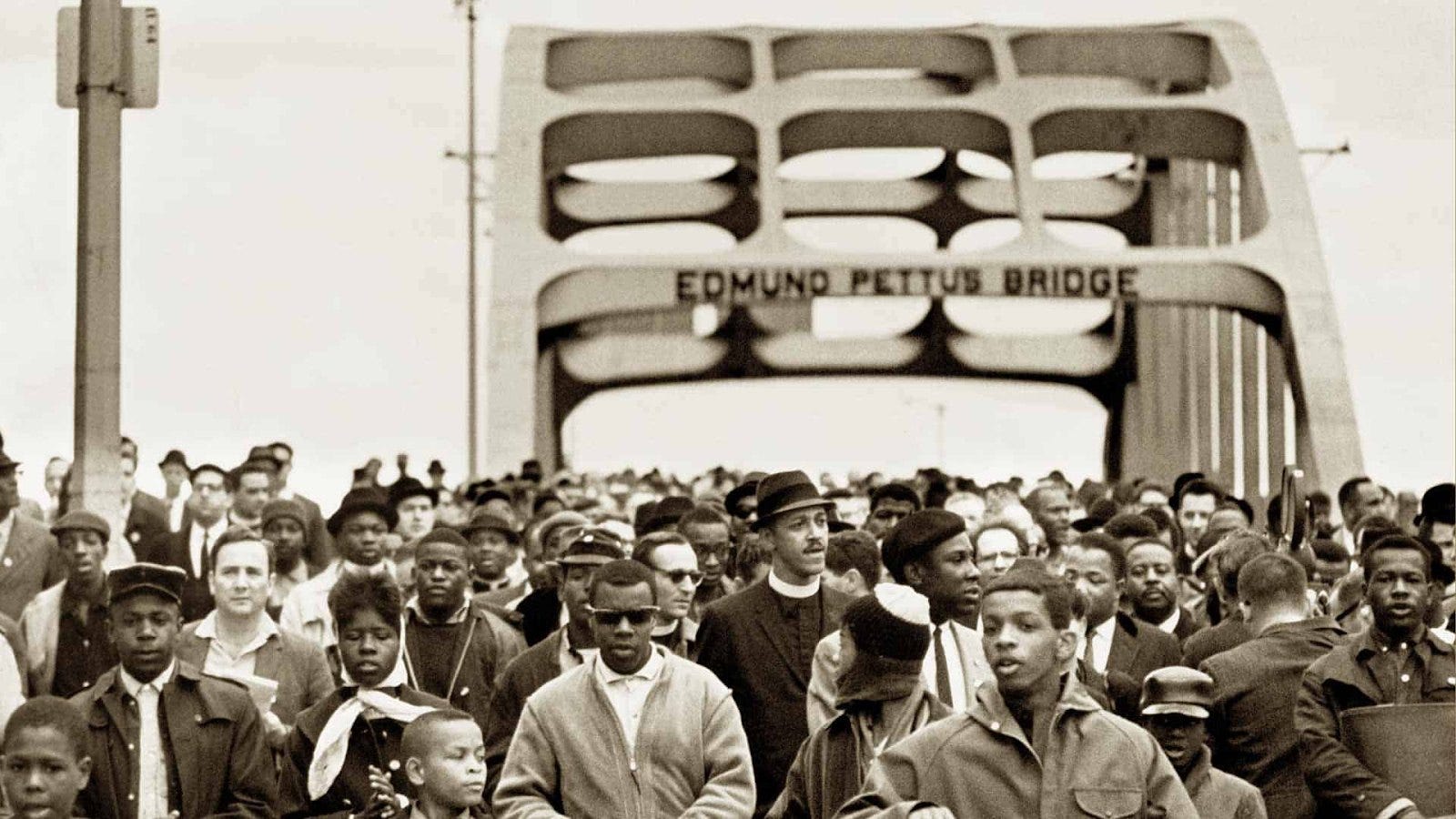
The Voting Rights Act of 1965 was an attempt to correct a deliberate system of exclusion. Jim Crow was designed not just to suppress Black votes, but to erase Black political power entirely. This isn’t ancient history. My grandparents told me stories of being taxed, policed, and governed by people they had no real power to choose or hold accountable.
The Voting Rights Act gave the federal government the authority to stop discriminatory election laws before they took effect. It made it possible for communities that had been shut out for generations to finally elect leaders who looked like them, understood them, and were accountable to them.
That progress changed the South. It helped produce Black mayors, legislators, members of Congress, statewide officials, and community leaders across states where that kind of representation had once been treated as impossible. It allowed democracy to function a little more like democracy.
None of that happened by accident. It happened because people fought for it. They marched, organized, litigated, and in many cases put their lives on the line for the basic idea that citizenship should come with actual political power.
Now those protections are being dismantled piece by piece.
First came Shelby County v. Holder, which gutted the preclearance provisions of the Voting Rights Act. That decision was sold as evidence that the country had changed enough that extraordinary protections were no longer necessary. Anyone paying attention knew better. It was not the end of discrimination. It was the removal of the guardrails.
Now comes Callais, another reminder that once protections are weakened, the next attack is never far behind.
When people talk about these decisions as if they are technical legal disputes, they miss the real consequence. When you remove the medicine, the disease does not disappear. It comes back.
It returns through redistricting maps designed to weaken Black voting strength. Legal theories are dressed up as neutrality. There’s a familiar insistence that fairness has gone too far and that equal representation somehow became unfair to those who were comfortable with inequality.
Coming to a State Near You
If you think this stops in Louisiana, you have not been paying attention.
There are already signs that Republicans, emboldened by Donald Trump and empowered by the Supreme Court, are looking at states like South Carolina for the next round of congressional redistricting fights.
Because in South Carolina, these fights are never just about lines on a map. They are about whether communities that spent generations fighting for representation will once again have their political voices weakened and diluted.
This one feels personal. As a Black man born and raised in Orangeburg, South Carolina, I grew up understanding what representation meant because I also understood what happened when our communities did not have it.
When there is nobody at the table fighting for you, your community suffers.
School investment becomes optional. Hospital access becomes negotiable. Your roads, your jobs, your economic future all become somebody else’s afterthought.
And for parts of the Black community, this moment needs to be a wake-up call.
We cannot afford indifference or cynicism. Now is not the time to check out because politics feels exhausting or disappointing. Because when representation disappears, power disappears.
And when power disappears, somebody else makes decisions about your life.
This Cannot Be Met With Silence
Black voters are not simply one constituency inside the Democratic coalition. They are the backbone of the modern Democratic Party. Cycle after cycle, election after election, Black communities have stood up and defended democracy in some of the hardest places in this country. And right now, they need more than talking points.
That loyalty requires strategy, investment, and seriousness.
That is why I have begun working with Democratic Party chairs across the South to coordinate our efforts to educate, organize, and mobilize voters throughout the region.
And candidly, this may be one of the first efforts of its kind in more than 50 years—Southern Democrats standing shoulder to shoulder with a shared understanding that we cannot allow history to repeat itself.
Because that is exactly what this moment is about.
It is now crystal clear why Donald Trump and his MAGA allies have spent so much time trying to wipe away history, especially Black history.
They do not want people to understand that this has all happened before.
They do not want folks connecting today’s legal arguments to yesterday’s suppression. They do not want people recognizing how power was stripped away after Reconstruction through maps, courts, laws, intimidation, and division. Because when people understand history, they become harder to fool.
Well, there are those of us who know that history, and we are fully committed to making sure it remains exactly that: Our history. Not our future.
But let me be crystal clear: We are not powerless. This moment should awaken every single one of us.
We cannot afford to sit on the sidelines while others redraw the future of our families and our communities.
The people who built movements before us did not do it because success was guaranteed. They did it because surrender was unacceptable.
We will organize. We will mobilize. We will fight for representation not because it is politically convenient, but because it is morally necessary.
And to anyone who believes our voices can be diluted, erased, or pushed aside, understand this: We know what this fight looks like because we have lived it before.
We are not confused about what is happening.
And we are sure as hell not going back.
I recall Alistair Cooke writing in his companion book to the "America" mini-series that "it will be a bad day for the United States if the mass of Americans come to lose their faith in it [the Supreme Court] as their fair and final protector." I fear that "bad day" has been with us for quite some time now.